The Anti-Meta Manifesto: Why Copy-Pasting Pro Loadouts Is Costing You Games
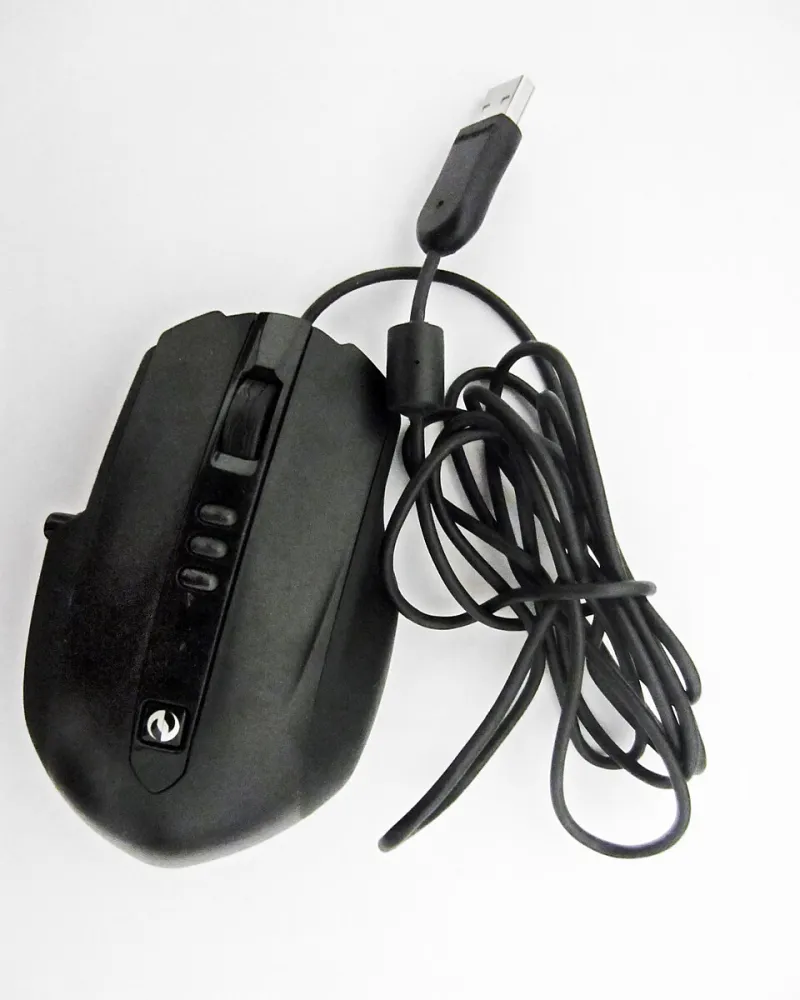
Photo: Hanno Böck, CC0, via Wikimedia Commons
You've done it. Watched the clip, copied the sensitivity, rebuilt the loadout, jumped into ranked. Felt worse. Then a patch landed, the tier list shifted, and you did it all again.
If that loop sounds familiar, you're not bad at games. You're just running someone else's settings through a body and a broadband connection that were never part of the original test.
Patch Culture Has Outrun Human Adaptation
The 2026 balance cadence is relentless. Something gets nudged every few weeks, creators need content, and 'the best loadout' is a headline that resets itself before your hands have finished learning the last one.
Muscle memory doesn't work at that speed. It's built by repetition over weeks, not by a Tuesday morning hotfix. Every time you rebuild your setup around a new video, you're paying a small, invisible tax in consistency — the exact quality that separates a good player from a streaky one. The meta moves at the speed of a content calendar. You move at the speed of a nervous system.
Pro Loadouts Don't Travel
Worth saying plainly: those setups are built for a different job. LAN conditions, single-digit ping, a coach, eight hours a day, and four teammates whose entire role is to make sure the star player never has to think about anything except the next duel.
You are on a box room desk in Leeds at 9pm, sharing a connection with someone streaming a boxset, playing with three lads from a group chat. That's a completely different problem, and copying the answer from the wrong exam is not a personality trait.
The Comfort Loadout Framework
Four pillars. Get these right and the patch notes stop mattering quite so much.
Pillar 1: Input honesty
Pick one input and commit. Controller or mouse and keyboard — not both, not 'depends on the game', not 'I'm better on pad but the meta says otherwise'. Hybrid players plateau because they never build enough reps on either.
The uncomfortable truth is that aim assist in 2026 is generous enough that plenty of UK players would gain more from a controller and better positioning than from a mouse and a worse one. Play the input you grew up with, then stop relitigating it every fortnight.
Pillar 2: Desk reality
Measure before you copy. Seriously — get a tape measure out.
- How many centimetres of mouse mat space do you actually have?
- Can you do a 180 without lifting and re-centring twice?
- Is your monitor close enough that you can track a target at range without leaning in?
- Does a full-size keyboard leave your mouse arm at an angle all evening?
A low sensitivity that a pro uses with a metre of desk is a bad joke on a 40cm IKEA special. A tenkeyless or 60% board buys you 12cm of swing space for less than a takeaway. Comfort is a physical layout problem before it's a settings problem.
Pillar 3: Your latency budget
Ping is the number people quote. It's the least useful one on its own.
Add up your actual chain: refresh rate, input lag, Wi-Fi versus wired, and the latency to the server you're actually placed on. If you're on 60Hz, wireless, and 40ms to a European data centre, a £200 mouse is a decoration.
Spend in this order: wired connection or powerline adaptor, then high refresh monitor, then mouse, then everything else. That order doesn't change between patches, which is the whole point.
Pillar 4: Server weather
UK players get routed to London, Dublin, Amsterdam and Frankfurt depending on game, time and population. That means your connection has a rhythm: crisp mid-afternoon, progressively soggier from about eight until eleven, and genuinely unpleasant on Sunday nights when everyone is on at once.
Learn it and plan around it. If your ping is spiking, stop picking the role that needs frame-perfect peeks. Anchor, support, play the angle instead of the entry. That's not settling — it's the same adjustment pros make, just for different reasons.
The Checklist
Pin this somewhere. Work through it once and then leave it alone.
- One input. Six weeks minimum, no swapping.
- One sensitivity, written down as a cm/360 number so you can measure it again later.
- Wired where possible. If not, powerline over Wi-Fi every time.
- One primary mouse. A spare in a drawer does not count as a rotation.
- Loadout chosen by role, not by tier list position.
- Two-week rule: no voluntary changes within fourteen days of a change.
- The comfort test: three ranked games where you never once thought about your gear.
If you fail the comfort test, the fix is almost always physical — chair height, monitor distance, a pad that's slid six inches to the left — not a new item in a basket.
What It Looks Like In Practice
CS2. One rifle you can spray, one pistol you trust, one utility set you can throw blind. The community's flavour-of-the-month SMG is not worth three weeks of relearning your spray.
Valorant. Three agents, one sensitivity, no exceptions. A comfort agent played well beats a meta agent played hesitantly, and your teammates will notice the difference before the scoreboard does.
Warzone. One build you can control at 40 metres rather than the gun at the top of a damage chart you can't land shots with. Recoil you can manage is a stat. Recoil you can't is a rumour.
Siege X. An operator trio that covers your usual angles. Drone confidence comes from repetition, not from the pick rate column.
Fortnite. One build sens and one edit sens, locked. Every creator who tells you to split them further is selling a video, not a solution.
When Changing Is Genuinely Correct
There are real reasons to rebuild: hardware failure, a new game with different demands, an injury or RSI issue, or a plateau you can prove with a hundred hours of data. Those are engineering problems and they deserve engineering answers.
Bad reasons: a clip from someone with better reflexes than you, a patch note you read at 1am, or one rough night where you went 3-11 and decided your entire setup was the culprit.
The Long Game
Consistency compounds in a way that gear never does. The player who's run the same sens for a year knows exactly how far their crosshair travels; the player who rebuilds weekly is permanently a fortnight behind, forever chasing a version of themselves that never gets to settle.
So let the meta churn. Let the tier lists rotate. Build something you can forget about, then go and use it to ruin someone's evening in a UK lobby.