Sardine-Class Gaming: A Sub-£100 Ranked Kit Tested on the 07:42
The 07:42 is not a gaming chair. It is a moving, sneezing, tannoy-interrupted test chamber with a table that is never quite level and a signal bar that lies. If you are trying to squeeze ranked games into a UK commute in 2026, the goal is not the fastest frame rate on the train. The goal is a kit that does not fall apart when the train stops between stations for no reason.
We built a commuter loadout for under £100 — accessories only, because most of us already own the phone or laptop — and ran it for five working days. The route was deliberately ordinary: an outer-London commuter service into a terminus, one Tube change, and one evening delay that stretched to 38 minutes on a cold platform. We measured four things: did the connection hold, did the battery last, could the whole kit be packed away in 20 seconds, and did we actually want to keep playing.
The Commute Is the Lobby
A desk setup is a controlled environment. A train is a chaos test. You get sudden braking, shoulder-to-shoulder seating, announcements that cut through everything, and Wi-Fi that exists mainly to serve a login page. That is why commuter ranked is a performance problem before it is a gear problem.
The biggest mistake is buying for the best-case journey. A table seat, a quiet carriage and a strong signal will make almost anything feel fine. The kit has to survive the worst case: standing room, one bar of signal, a controller buried in a bag, and a battery percentage that is falling faster than your rank.
Handheld First, Laptop Second
Start with the device you already carry. For most people that means a phone and a controller, not a handheld PC. A sub-£100 budget does not buy a Steam Deck-style machine, and pretending otherwise is how you end up with a cheap tablet and a worse experience.
A mid-range phone with a stable connection and a pad you trust will beat a flagship handheld on a train with one bar of signal. The phone wins on weight, battery and pocketability. The controller is the part that decides whether the session feels like gaming or like fighting the hardware.
Laptops are the second option, not the first. If you already carry one for work, a compact controller and a short cable can turn a table seat into a usable session. But heat, battery drain and the need for a flat surface make laptops a bad fit for standing carriages or short Tube hops. If you are playing anything that needs quick reactions, the laptop should stay in the bag until you get a table.
The £100 Packing List That Survived
The rule for this build was simple: every item has to remove a failure point. No RGB. No 'pro' tax. No gadget that only works when everything else is already perfect.
| Item | Street price | Why it earns its place |
|---|---|---|
| 10,000mAh USB-C PD power bank | £18 | Keeps the phone and controller alive through a delay |
| Short braided USB-C cable | £6 | Less snagging, less strain on the port |
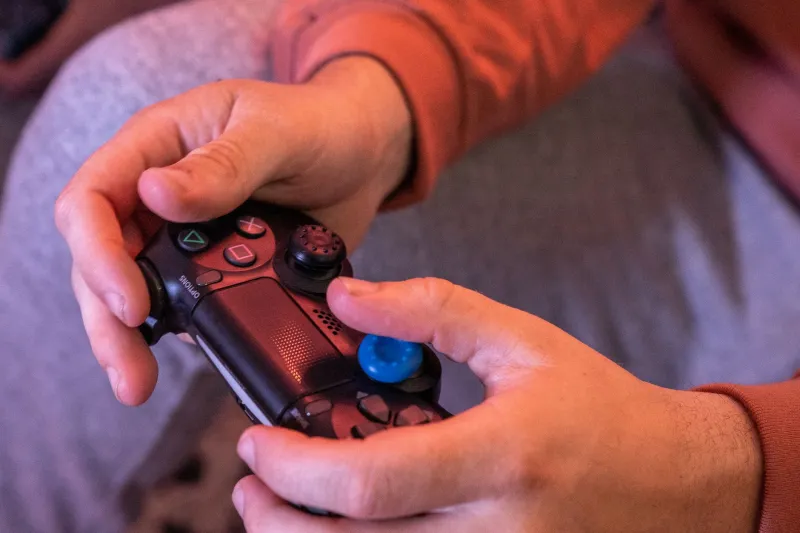
| Bluetooth controller with phone clip | £32 | The core of the setup; buy for sticks, not looks |
| Wired IEMs with inline mic | £14 | Passive isolation and no charging anxiety |
| Compact hard case | £9 | Stops the controller getting crushed in a rucksack |
| Velcro straps | £4 | The unglamorous hero of cable management |
| Total | £83 | Leaves headroom for data or a spare cable |
That leaves roughly £17 for a data add-on or a second short cable. Prices move, and own-brand accessories are usually fine. The point is the shape of the kit, not the logo on the box.
Battery Is a Stat, Not a Vibe
A power bank is not a magic brick. It is a budget you have to manage. The phone screen, the mobile hotspot and a Bluetooth controller all pull power at the same time, and a 10,000mAh bank is not a week of ranked. In our test it covered two commute sessions plus one long delay before it needed a proper recharge.
The settings that helped most were boring: screen brightness around 50%, refresh rate capped at 60Hz, background sync off, and game updates downloaded before leaving the house. Bluetooth controllers can last for days, but a cheap one with rumble left on will chew through its own battery. Turn rumble down if you are packing light.
Do not rely on the train's USB socket. Some carriages have them, plenty do not, and the ones that do are not a guarantee. Treat the power bank as the primary supply and the train socket as a bonus.
Hotspot Tactics for Dead Zones
Station Wi-Fi is a trap. It is fine for checking a delay, but it is not a ranked connection. Captive portals, crowded access points and random dropouts make it worse than a phone hotspot you control. Tether from the phone, keep the phone high and near a window, and do not bury it at the bottom of a bag.
If your phone lets you lock the hotspot to 5GHz, do it when the device is close. If it lets you force 4G instead of 5G, try it in areas where the signal is unstable. A slower but steadier connection is usually better for games than a fast connection that keeps handing off between masts.
Before you queue, run a 30-second ping test. If it is spiking before you even load in, do not force ranked. Play a casual match, warm up, or accept that this is a podcast journey. Queueing into a lobby with a connection that is already wobbling is how you donate rank points to someone who is sitting at home with a wired connection.
Controllers and Cans: Where Cheap Kits Fail
The controller is the one place where cheap can still be smart. Look for Hall-effect sticks if you can find them at this price. They are not a guarantee of quality, but they remove the slow death of stick drift that turns a £30 pad into a paperweight. Check the deadzone in the game's settings and keep it as low as the pad can handle without ghost inputs.
Wired is better than Bluetooth if your phone or laptop has a free port and you do not mind the cable. Bluetooth is fine for slower games, but it adds a variable you do not need in a ranked lobby. If you are using a clip, make sure it grips the phone firmly. A pad that shifts mid-match is worse than a pad with a slightly mushy button.
Audio is the other failure point. Wired IEMs with a mic are cheaper than good wireless earbuds and never need charging. Passive isolation is enough to cut train noise without making you miss platform announcements — and you should not be blocking those out anyway. Keep one ear free if you are on a platform. Noise isolation is a performance tool, not a personality.
The Delay Test
Platform 4, 38 minutes, one train cancellation and a tannoy that repeated the same sentence four times. The hotspot dropped once when a train arrived and everyone's phone woke up at the same moment. The controller stayed connected. The IEMs did their job. The power bank kept the phone alive long enough to finish the session and still call home.
The kit did not make anyone a better player. It stopped the journey from costing games for reasons that had nothing to do with skill. That is the whole point of a commuter loadout: remove the excuses, then accept the ones you cannot remove.
Verdict: Buy Boring, Queue More
Go Loaded's rule for commuter ranked is simple: if an item does not solve a problem you have actually experienced on a train, leave it at home. The best commuter kit in 2026 is not the most expensive one. It is the one that charges, connects, packs away and survives a delay without turning your ranked session into a hardware disaster.
Build for the bad days. The good ones will look after themselves.