Low Sun, High Ping: The £18 Winter Glare Kit That Saves Your Evening Ranked
Photo: PantheraLeo1359531, CC BY 4.0, via Wikimedia Commons
There's a specific kind of UK winter misery that hits at about 4:40pm. The sun drops under the cloud deck, lines itself up with your window, and turns your monitor into a dull grey mirror. You squint. You lean in. You blame the lobby. But the lobby isn't the problem — the glare is. It's a tax on every target you track, and it gets charged hardest during the evening ranked window when everyone is tired, tilted, and trying to squeeze in one more game before tea.
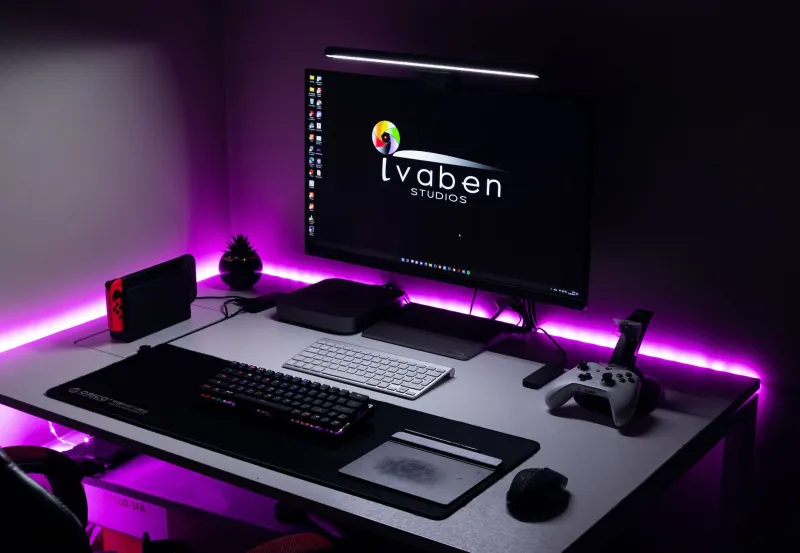
We spent three weeks testing a cheap anti-glare kit in a Sheffield flat with a bay window that behaves like a searchlight from November through January. The brief was simple: spend less than a new mouse, avoid drilling holes in a rental, and see whether the kit actually changes how the game feels in evening queues.
The setup and the squint test
The test station was a 27-inch 1440p monitor, a plain desk, and a window to the left of the screen. No fancy blinds, just the usual landlord-special vertical slats that do roughly 40% of the job. Sessions ran between 5pm and 8pm, which is when UK daylight goes low, sharp, and deeply annoying.
We ran two simple checks before and after the kit. First, a perceived-contrast check using a dark-room test pattern and a bright-room test pattern — basically, can you still pick out shadow detail when the window is throwing light across the panel? Second, a short reaction test done in the same chair, same mouse, same tired brain. This wasn't a lab study. It was a bloke in a flat with a stopwatch and a growing resentment for the sun.
The before picture was grim. With the low sun hitting the desk, dark areas of the screen turned milky, and the difference between a shadow and a player model got noticeably thinner. Reaction times drifted by roughly 15–20ms across the session, but the bigger issue was consistency. Some rounds felt fine. Others felt like playing through a greasy lens. That inconsistency is what makes glare so costly: you don't just lose speed, you lose trust in what you're seeing.
The £18 kit
Here's the shopping list. Prices are rough UK high-street numbers from late 2026, and none of it needs an app or an account.
- Blackout curtain or roller blind: £8. We used a cheap blackout roller blind from a local discount shop. A charity-shop curtain and a tension rod works too, and it's more rental-friendly if you can find the right width.
- Cardboard monitor hood: free. Two side panels and a top panel, cut from a delivery box. Gaffer tape holds it together. Matte black tape or a quick coat of matte black paint on the inside stops reflections.
- USB bias light strip: £10. A basic 6500K-ish white strip taped to the back of the monitor. You want it facing the wall, not your eyes. Warm white is fine if cool white feels harsh.
Total: £18. Less than most 'gaming' mousepads, and considerably less than a new mouse. The hood looks daft. That's fine. Ranked points don't care about interior design.
What actually changed
The blackout blind did most of the heavy lifting. Once the direct sun was blocked, the monitor stopped behaving like a mirror and the whole desk felt calmer. Perceived contrast came back in dark areas — not to midnight-black levels, but enough that shadow details stopped swimming. The reaction test tightened up, mostly because we weren't re-reading the same corner of the screen three times to work out what was moving.
The hood was the surprise. It won't fix a window behind you, but for side-window glare it cuts the light that skims across the panel and kills contrast. It also creates a slight tunnel effect that makes the screen feel more deliberate. We wouldn't use it in a bright room with the lights on, but for evening queues with the big light off, it works.
The bias light was the subtle one. Putting a soft wash of light behind the monitor reduced the harsh contrast between a bright screen and a dark room. That made long sessions less fatiguing, which matters more than any single reaction-time number. It doesn't make you faster. It makes the last hour of a session feel less like staring into a headlight.
The 20-minute repositioning plan
You don't need to rebuild the room. You need to break the direct line between the sun and your screen.
0–5 minutes: find the attack angle. Sit in your chair at 5pm and look at where the light lands. If the sun hits the screen face or the wall right behind it, that's your problem. Shift the monitor 10–15 degrees away from the window if your desk allows it. Even a small turn can move the hotspot off the panel.
5–10 minutes: kill the direct beam. Fit the blackout blind or curtain. If you can't drill, use a tension rod inside the window recess or adhesive hooks rated for the weight. Don't cover vents or heaters. This is the step that buys you the most improvement for the least effort.
10–15 minutes: build the hood. Cut two side panels roughly 25–30cm deep and one top panel. Tape them to the monitor bezel with gaffer tape, leaving the bottom open for cables and ventilation. Line the inside with matte black tape. Keep it away from the monitor's vents. If your monitor runs hot, make the hood shallower or skip the top panel.
15–20 minutes: set the bias light and recalibrate your eyes. Stick the USB strip to the back of the monitor, facing the wall. Set it low — you want a glow, not a second monitor. Turn the room lights off, load a dark game, and adjust your monitor brightness until you can see shadow detail without the panel feeling like a torch. Give your eyes five minutes to settle before you queue.
The verdict
Glare is a silent nerf. It doesn't show up in your ping, your frame rate, or your mouse settings, but it absolutely shows up in how quickly you spot a flank and how confidently you hold an angle. The £18 kit won't turn a silver into a diamond, and it won't fix a bad connection or a tired brain. What it will do is remove one avoidable tax on your evening ranked sessions.
If your setup faces a window, start with the blind. Add the hood if side light is still smearing your screen. Add the bias light if your eyes feel like sandpaper by 9pm. Then queue with one less excuse. That's the Go Loaded way: gear up, level up, and stop letting the British winter play on your team.