Read-Only Ranked: A Week of Queuing From a Council Library on £35 of Kit
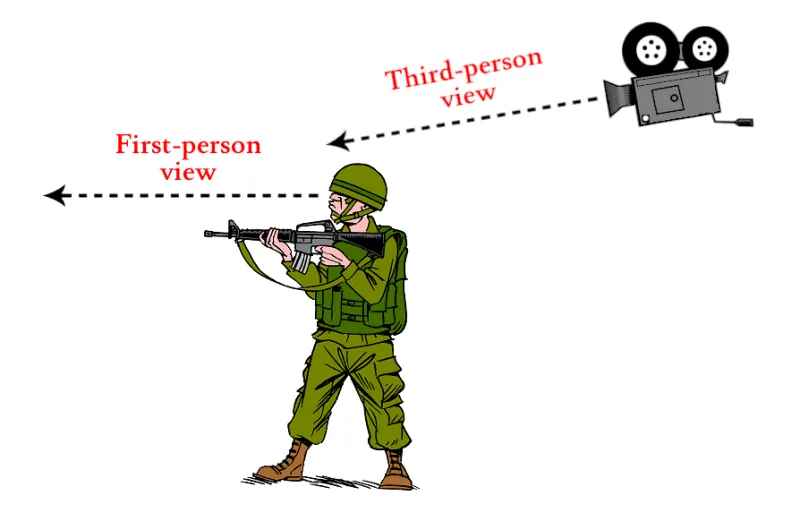
Photo: Belbury, soldier by Carlos Latuff, CC0, via Wikimedia Commons
Not everyone has a door they can shut. Flats get shared, box rooms get filled with bikes and drying racks, and the corner of a living room stops being yours the moment someone puts the telly on. That's the reality for a lot of UK players, and it's the reason my ranked sessions used to live entirely inside a headset at 11pm, hunched over a laptop on a coffee table with my spine slowly filing a grievance.
So I tried something daft. Seven days, one council library, one quiet café, and a total kit spend of £35. No gaming chair, no RGB, no bedroom door. If you're in the same boat, here's the honest field report — what you can pull off, and what public-desk gaming genuinely costs you in the lobby.
The £35 kit list (and why it looks like this)
The whole point was to stop pretending a library desk is a gaming desk. Low profile, quiet, and packable beats fast and flashy when a librarian is two metres away.
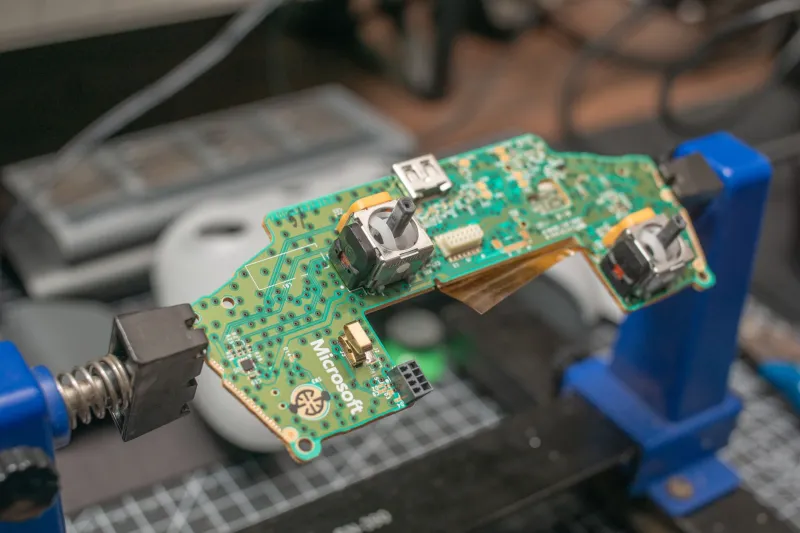
- Pre-owned wired pad — £15 (CeX or eBay). Wired, because Bluetooth pairing on a locked-down machine is a faff and I wanted zero input-dropping excuses. A used first-party-adjacent pad at this price is fine; check the sticks for drift before you hand over cash.
- Wired earbuds with a mic — £5. Nothing fancy. You need to hear footsteps and you need to not be that person leaking game audio into a study area.
- Folding phone stand, used as a laptop riser — £4. Gets the screen up to something resembling eye level, which matters more than you'd think over a three-hour session.
- USB-C cable, 3m — £6. Long enough to reach the one socket at the end of the desk bank without unplugging a stranger's laptop.
- Velcro cable ties and a microfibre cloth — £5. Housekeeping. Nobody wants to sit down next to a nest of cables, and library staff definitely notice.
Total: exactly £35. Everything fits in a laptop sleeve plus one small pouch.
Power, sockets and the politics of the desk bank
Libraries are generally decent for sockets — better than trains, worse than your kitchen. The catch is that the socket is rarely where you want to sit, and the good seats (back to the wall, screen facing away from foot traffic, near the router) are not always the powered ones.
The 3m cable solves about 80% of that. What solved the rest was a simple rule: don't be the person running an extension lead across a walkway. If the seat you want has no power, move. Your rank is not worth a trip hazard and a stern conversation.
I also skipped a power bank entirely. A 10,000mAh brick would have blown the budget and, honestly, a laptop gaming session on integrated graphics drains fast enough that a small bank just delays the problem. Plug in, charge to full before you leave, and treat battery as a nicety.
Wi-Fi is the real boss fight
This is where public-desk gaming lives or dies, and it's not about speed. The library guest Wi-Fi here pulled a perfectly respectable download figure. It also jittered like a fridge on a laminate floor between 3pm and 5pm, which is exactly when the schools empty out.
Three things that actually helped:
- Test jitter, not speed. A quick command-line ping to a stable host, run for 30 seconds, tells you more about whether your lobby will feel awful than any speed test graphic.
- Sit closer to the access point. Boring, effective. Walls and shelving eat 5GHz for breakfast.
- Tether from your phone as the fallback. A cheap SIM-only deal with a big data allowance is the single best "accessory" for this setup, even though it's not in the £35. I used it for two evenings when the library network fell over, and it was more stable than the guest Wi-Fi.
Public networks also tend to have captive portals that drop you mid-match when the session expires. Log in, then immediately open a second tab, kick off a session timer if you can, and keep an eye on it between games rather than during one.
Etiquette is a performance stat
Here's the bit nobody writes about. Controllers click. Mechanical keyboards clack. Voice chat carries. In a library, all three are antisocial, and getting moved on mid-match is a far bigger performance hit than 20ms of latency.
What worked for me:
- No voice comms. Ping, type between rounds, or party up with people who understand you're on text. It's a real competitive handicap and I won't pretend otherwise — but a shushing librarian is worse.
- One booked study room a week. Most councils let you reserve a small room free or for a couple of quid. That's your one proper session. Save the sweaty games for it.
- Timing. Mid-morning to early afternoon is dead quiet. After 3pm it's a creche with better shelving.
- A café as the alternative. Buy a coffee every 90 minutes, sit away from the counter, and you're golden. Cafés are noisier, which oddly helps — nobody notices a pad. The trade-off is worse Wi-Fi and a table that wobbles.
The actual performance trade-offs
Let's be clear-eyed. Public-desk gaming in 2026 is viable, not optimal.
- Display. You're on a laptop panel or a locked-down library monitor running at 60Hz with no access to settings. That's a hard ceiling on how crisp your aim feels.
- Input lag stack. Library peripherals, a shared network, and whatever the machine is doing in the background all add up. Expect a squishier feel than your home setup — the sort of thing that costs you the tightest duels rather than the whole game.
- Cloud gaming as a workaround. If the venue's laptop is weak, streaming a session can genuinely be smoother than running it locally on integrated graphics. It also adds a hop to everything, so test it before you commit a ranked climb to it.
- No macros, no drivers, no tweaks. Half the performance advice on this site assumes you own the machine. Here, you don't.
So is it worth it?
Yes — with adjusted expectations. In a week I climbed slightly, tilted less, and stopped treating ranked as something I could only do in a sealed room at midnight. The £35 kit did its job, the etiquette rules did more for my win rate than any mousepad upgrade, and the discipline of playing in a place where I can't shout at the screen made me a calmer player.
If you've got no gaming room, stop waiting for one. Build the rucksack kit, book the study room, and go and queue. Just mind the sockets and keep the noise down — those shelves have ears.