Mesh, Gas and Castors: The £40 Surplus Chair Setup That Steadies Long Ranked Nights
A racing seat is a bit like RGB: it looks brilliant in a photo and does very little for your crosshair placement. In 2026, a shiny new racing-style chair still asks for £250 or more, while a perfectly serviceable ex-office task chair can leave a council surplus auction for £40. For UK players grinding ranked into the night, that is not a compromise. It is often the smarter buy.
The throne tax
Racing chairs are shaped like bucket seats because they are meant to hold you in place while a car corners at speed. Your desk does not corner. Your desk asks you to sit square, keep your shoulders loose and make tiny mouse movements for two hours without your back filing a complaint. Deep side bolsters and a fixed recline are not your friends here. They can push your shoulders forward, restrict your arm arc and turn a long session into a fidget festival.
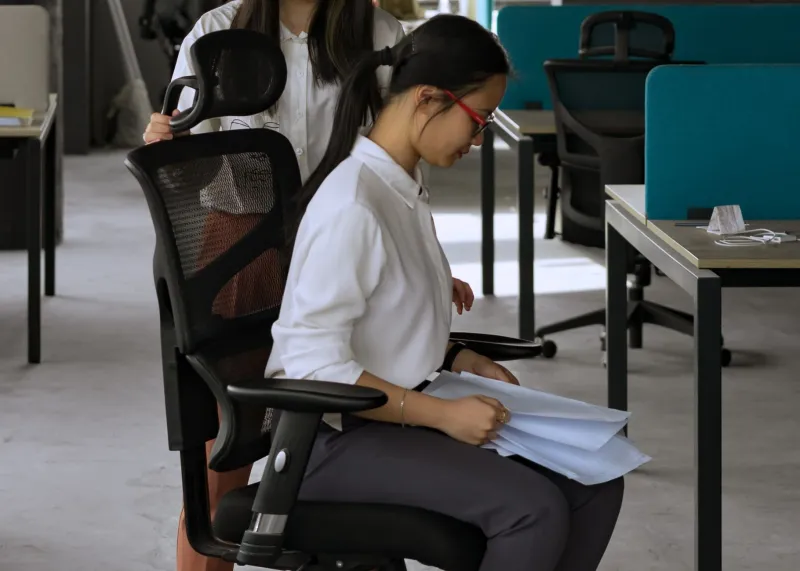
Office chairs were designed for people doing desk work for eight hours. That is the entire brief. Mesh backs breathe, gas lifts adjust, armrests move and castors roll. They are not glamorous, but they are built around the thing you actually do: sit still and concentrate.
Where the £40 chairs actually live
You will not find these chairs in the gaming aisle. You find them in the boring corners of the UK: council facilities teams clearing out old desks, NHS estates departments refreshing waiting rooms, university accommodation blocks replacing furniture between terms, and public sector surplus auctions moving pallets of perfectly good kit.
Search locally for council surplus stores, university furniture reuse schemes and NHS auction listings. Set a radius you can realistically drive, because most of these chairs are collection only. Take a van or a mate with a hatchback, a tape measure and a blanket. Check the listing photos for cracked bases, missing castors and suspiciously shiny spray-paint jobs. Ask whether the gas lift holds height and whether the mesh has any sag. A seller who answers those questions clearly is usually a seller worth visiting.
The five-minute auction inspection
When you get there, do not sit down like you are testing a sofa. Test it like a ranked player who intends to keep it for three years.
- Gas lift: Drop it to the lowest setting, raise it, and sit. If it sinks slowly or grinds, walk away. A replacement gas lift is cheap, but fitting one is a faff you do not need.
- Base and castors: Flip it over. Look for cracks around the star base and check that all five castors roll without wobbling. Castors are easy to replace; a cracked base is not.
- Mesh and foam: Press the mesh where your lower back sits. It should feel taut, not baggy. Check the seat foam for collapsed edges.
- Armrests: Raise and lower them. Wobble them. You want them to lock at desk height without squeaking like a haunted gate.
- Seat depth: Sit back properly. You should have roughly two fingers of space behind your knee. Too deep and you will perch; too shallow and you will slide.
Ignore the brand sticker. Ignore the scuffs. Focus on structure, adjustment and smell. A clean £30 chair with a solid gas lift beats a £60 chair that has lived through a decade of breakroom lunches.
Pairing it with a normal UK desk
Most UK desks sit around 72cm to 75cm high. Your chair should let you set the seat so your feet are flat and your thighs are roughly level, then bring the armrests up to desk height. If the armrests will not reach, you can raise the chair and use a footrest. If the chair is too tall for the desk, you will end up hunched over like a gargoyle.
Bring your keyboard and mouse close. A stable chair lets you sit square to the desk instead of twisting toward a mousepad that has drifted away. If your desk has a thick front edge, check that your forearms rest on the desk rather than the edge. A £5 wrist pad can solve that. Keep the monitor top roughly at eye level and stop balancing the whole setup on a wobbly bedside table.
Why less fidgeting equals more consistent aim
Ranked consistency is not just sensitivity settings and a fast mouse. It is the number of micro-adjustments your body makes when it is uncomfortable. A chair that rocks, squeaks or forces your shoulders forward adds noise to every flick. You chase the mouse with your arm, then your back, then your posture. Over a long session, that adds up to sloppy crosshair placement and tired reactions.
A surplus task chair gives you a stable base. Mesh keeps you cooler during tense rounds. Adjustable armrests let your shoulders relax. A proper gas lift means you can sit at the right height instead of perching. None of this is exciting, but it is repeatable. Repeatable posture makes repeatable aim.
The £40 build list
A realistic auction build looks like this: chair £20 to £40, replacement castors £8 if needed, armrest pads £6, cleaning wipes £3. That is still comfortably under £60. Spend the difference on a better mousepad or put it toward the game you are actually trying to climb. The chair is not the flex. The stable session is.
Bottom line
Skip the throne. Buy a boring ex-office chair with a solid gas lift, taut mesh and armrests that lock at desk height. Give it a clean, pair it properly with your desk and let your posture do the quiet work. In UK ranked lobbies, the player who stops fidgeting is often the player who stops losing the same fight twice.