The Retention Call Boss Fight: Scripting Your Way to a Faster UK Broadband Deal in 2026
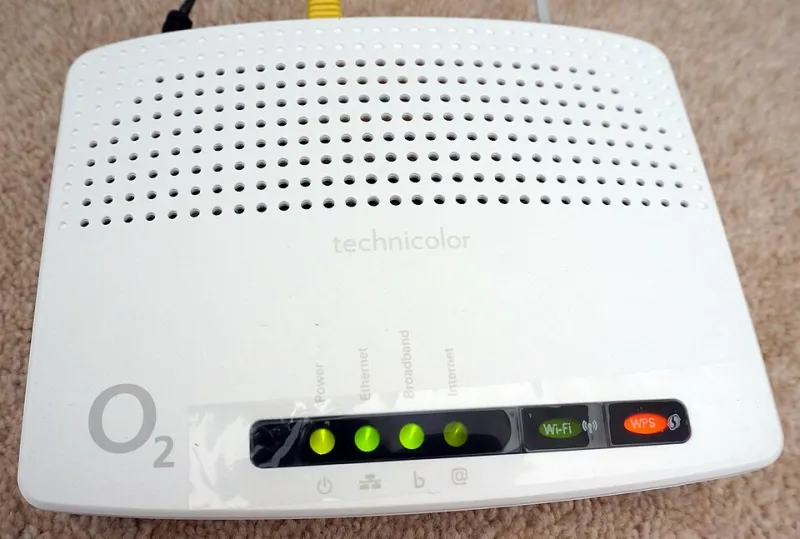
Photo: Ken218, CC BY-SA 3.0, via Wikimedia Commons
Your broadband contract doesn't end with a bang. It ends with a polite email, a price hike, and a retention agent who has heard every bluff in the book. For UK gamers, the renewal call is a ranked match of its own: you need a game plan, a couple of reliable stats, and the discipline to walk away from a bad deal.
This is the 20-minute script we'd use in 2026. It won't magically give you a dedicated fibre line to the server, but it will stop you paying more for a connection that makes your lobby feel like it's wading through treacle.
Before you dial: the 20-minute prep
Start with evidence. Run a wired speed test at 8pm and again at 10pm on a weekday. Note download, upload, ping and jitter. If you can, run it while someone else is streaming. That peak-hour snapshot is more useful than a lunchtime headline speed.
Next, open your current contract. Write down the monthly price, the end date, any mid-contract price rise, and the equipment fee. Then check what's actually available at your postcode: full fibre from Openreach, Virgin Media cable, Hyperoptic, Community Fibre, or a decent fixed wireless provider. You don't need ten tabs. Two credible alternatives are enough.
Finally, decide your walk-away number. That's the price you'll accept for the speed and latency you need — not the cheapest sticker in the comparison table. For most UK ranked players in 2026, a stable 150–300Mbps down and 50–100Mbps up is plenty. If full fibre is available, the upload and latency matter more than a bigger download number.
The questions ISPs dodge
Ask these before you talk price. 'What's the typical latency under load at peak time?' 'What's the upload speed, not just download?' 'Is there a minimum speed guarantee, and what happens if it's not met?' 'Which router do I get, and can I use my own?' 'Is there a mid-contract price rise in 2026, and how much is it?' 'Am I on CGNAT, and can I get a static IP if I need one?' 'What's the activation fee and the early termination fee?'
A good agent will answer. A great agent will put it in writing. If they dodge the latency question, that's a red flag. 'Gaming boost' add-ons are usually just a priority toggle or a router setting you can do yourself. You want the physical connection to be right before anyone sells you a sticker.
The script, word for word
Open with the facts, not a rant:
'Hi, I'm out of contract on the 12th. I've been with you for three years, but I've got a full-fibre quote from another provider at £32 a month with 500Mbps down and 100 up. Before I switch, I want to see if you can keep me. Can you put me through to retentions?'
When you get there:
'I'm not looking for a temporary discount that expires in three months. I want a 12-month price, the actual upload speed, and confirmation of the latency at peak time. If you can't match the speed, can you beat the price on my current line?'
If they offer a speed bump you don't need:
'That's more download than I'll use. I'd rather have a lower price or better upload. What's the best you can do on the 300/100 package?'
If they say 'that's the best I can do':
'Thanks. Can you email me that offer with the total monthly cost, the contract length, and any price rise? I'll compare it with the other quote and call back today.'
That last line is the important one. You're not bluffing; you're giving them a deadline and taking the emotion out of it. If the offer is bad, cancel. If it's good, get the reference number and the email before you say yes.
Upgrade thresholds worth paying for in 2026
Don't pay for gigabit if your router is the bottleneck, your devices are on Wi-Fi, and your flat has thick walls. In 2026, the sweet spot for a UK gaming household is usually full fibre with symmetrical or near-symmetrical speeds, a router that can handle peak-hour traffic, and a provider that doesn't oversubscribe your street into oblivion.
Worth paying for: full fibre if it's available; upload speed above 50Mbps; a documented low-latency profile; a router with a decent CPU and wired ports; and a contract that lets you leave if the speed guarantee fails. Not worth paying for: a 'gaming' badge on the package, a speed tier you can't use, or a 24-month lock-in with a price rise built in.
If you're on FTTC and full fibre is months away, a cheaper 80/20 package plus a good wired setup is often better value than an expensive 'boosted' copper line. If you're on cable, ask about upstream congestion and whether the node is oversubscribed. The answer might be corporate, but the question tells you a lot.
The close: what to confirm before you accept
Before you hang up, repeat the deal back: total monthly cost including equipment, contract length, activation fee, speed guarantee, price rise date, and cancellation terms. Ask for it by email. If the agent won't put it in writing, don't accept it. Screenshot the offer and save the call reference.
Then test the connection on day one. If the latency is worse than your old line, use the cooling-off period. A cheaper deal that makes every lobby feel like a slideshow isn't a deal. It's a downgrade with better marketing.
The bottom line
The renewal call is not about winning an argument. It's about leaving with a connection that suits your setup and a price you can defend. Do the 20 minutes of prep, ask the questions they'd rather skip, and be ready to walk. That's how you turn renewal roulette into a clean win.